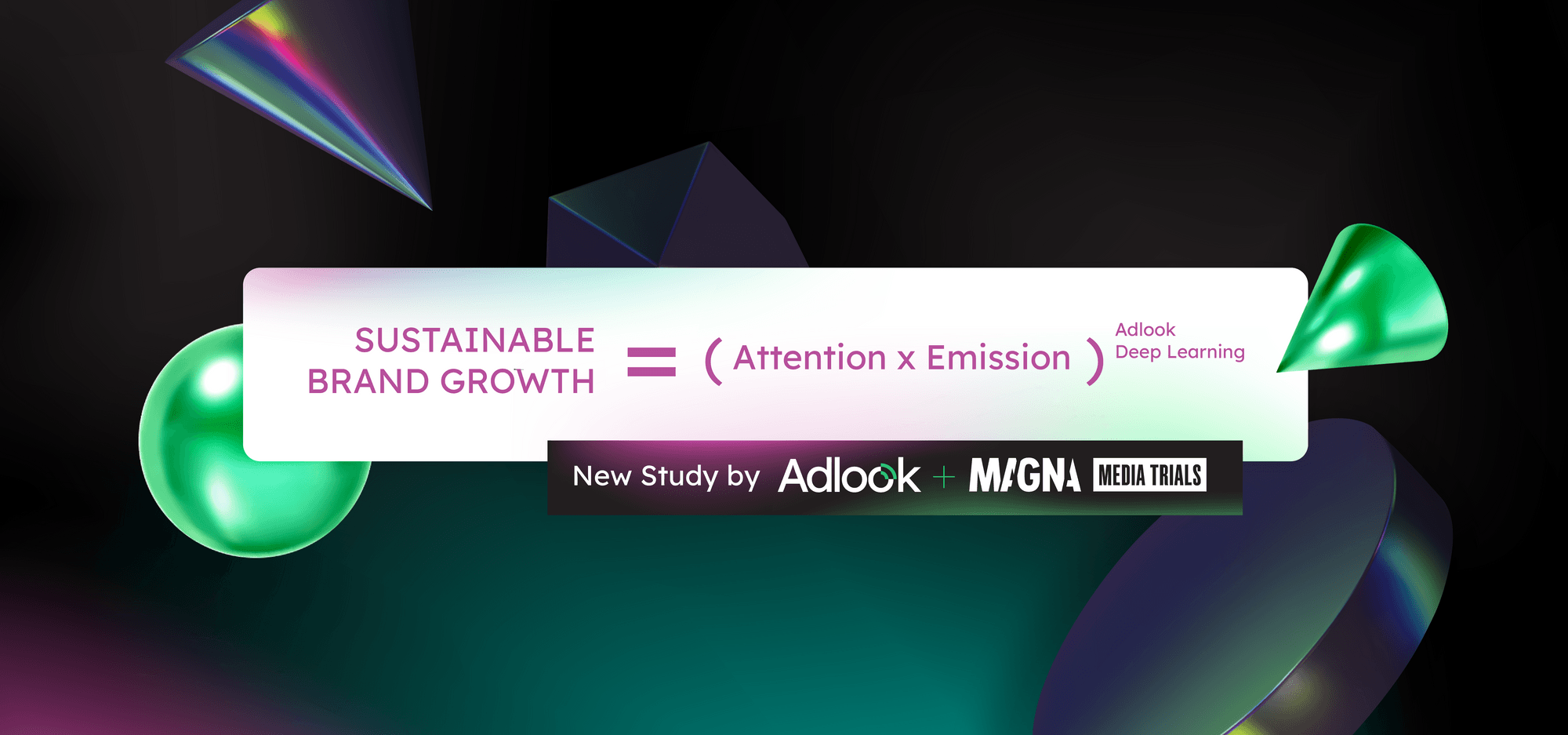


NEW YORK – 24 July, 2023 – An expansive, new study by MAGNA Media Trials, the intelligence and investment arm of IPG Mediabrands, and Adlook showed when advertisers optimize before they bid, they can gain significant improvements across a range of mandatory metrics, including increased attention scores, reduced costs per impression and fewer carbon emissions.
The Attention Advantage – Using Deep Learning to Boost Ad Performance revealed a 65% increase in attention, based on Adelaide’s Attention Unit (AU) scores, when a video advertisement was optimized pre-bid.
The study, which measured more than 24 million impressions and surveyed 2,590 individuals, found great improvements in cost efficiency for both display and video ads. But video ads that were optimized pre-bid performed notably better, to the point that advertisers would need fewer placements to achieve meaningful impact, resulting in lower costs per CPMs than display ads. These results point to the fact that advertisers do not have to pay more for high-performing ads – in fact, they can reap savings while also meeting important brand KPIs.
“Attention is a baseline metric for media, particularly in the programmatic space, and many of our studies examine how to capture and maintain eyeballs,” said Kara Manatt, MAGNA’S EVP, Managing Director, Intelligence Solutions. “Our work with Adlook set out to determine how pre-bid optimization performed, and found incredible impact across a range of KPIs, including sustainability metrics – meaning pre-bid optimization serves a dual objective: profit and purpose.”
As lowering carbon emissions become a core focus for advertisers, the study integrated Scope3 data to determine if emissions could be reduced through pre-bid optimization. The study found that ads optimized pre-bid not only worked harder, but likewise produced less emissions compared to ads that were not optimized pre-bid. This highlights the fact that less emissions are needed to produce the desired performance output. Another component of the study examined what happened to emissions when integrating Adlook’s GreenPath tool as part of the pre-bid process. Interestingly, emissions were further reduced by leveraging the GreenPath tool. These results point to the idea that although attention is an adequate proxy for emissions, MFAs have excelled at delivering on KPIs. As such, advertisers are encouraged to look at all campaigns through a sustainability lens pre-bid in order to reduce the impact of the highest-emitting websites.
Traditionally, campaigns have been optimized post-bid, which can allow advertisers to assess placements for viewability and unsuitable content adjacencies. But pre-bid optimization, driven by deep-learning algorithms, is providing brands with the data needed to secure customized placements before commitments are placed.
Additional findings in The Attention Advantage – Using Deep Learning to Boost Ad Performance report include:
- Display click-through rates increased by +11% lift when pre-bid optimization was employed compared to no optimization.
- Video ads that were optimized pre-bid earned a 48% increase in video completion rates, compared to those that were not optimized.
- Ads that are optimized pre-bid and delivered contextually deliver considerably greater recall, with a +131% delta lift in awareness.
“Unlocking the full potential of media lies in the art of attention optimization,” said Patrick Roman Gut, Vice President US, Adlook. “By harnessing the power of attention, not only do we propel media KPI performance to new heights, but we also embrace a profound responsibility. Our MAGNA Media Trials report reveals that utilizing pre-bid optimization not only amplifies your media’s impact, but also champions a higher purpose. By proactively combining sustainability with attention, we pave the way for responsible media practices.”
To conduct the study, Media Trials measured more than 24 million impressions of real-time test ads for CVS Health and Outback Steakhouse, analyzing for attention, engagement and carbon emissions for ads that were either optimized pre-bid or not. The study further analyzed 2,590 survey responses to measure aided recall for ads that were either optimized pre-bid or not, and were either delivered contextually or not.