
Adlook Appoints Industry Veteran Jim Daily as Executive Advisor
Bringing nearly 20 years of experience, Daily will lead GTM and brand strategy for the advertising technology leader.

Uncover 4 personal care shopper profiles in Brazil and how to activate campaigns with real data and behavior.

To uncover what drives consumer choices, Adlook ran a nationwide digital survey exploring key retail decision factors among Brazilians. The sample ensured balanced representation across all five major regions.
Thus, the study offers a comprehensive, nationwide view of consumer behavior and preferences. Some patterns make perfect sense – like: “Supermarket shoppers are 40% more likely to care about low prices and discounts when choosing Personal Care products”. But others are far more surprising… Older consumers are trading discounts for quality. Women are less sensitive to recommendations. News readers don’t care about the logo…
And these aren’t just surface-level trends – they’re statistically significant behavioral signals marketers can act on.
We have decoded what truly drives – and deters – the personal care (daily use) consumers in Brazil.
Our research focused on four core motivational drivers that shape how consumers choose personal care products – price, ingredients & quality, recommendations, and brand familiarity.
Additionally we’ve checked what are the prefered purchase channels for them: supermarkets, local stores, pharmacies or maybe they buy online?
Combined with demographic data and contextual signals, this forms a practical framework to build real consumer relevance at scale.
If you are interested in methodology, you can find it at the end of the article.
To better understand how different motivations shape consumer behavior, we identified four core audience archetypes derived from the dataset.
What you’ll see here are actionable audience types that we can create with our proprietary technology. Each group represents a unique combination of motivational drivers, purchase channels preferences, content consuming behaviours and demo data. These segments are based on observable statistical patterns – but they’re also just the visible layer.
Beneath this surface, Smart Audiences integrates many more signals using Deep Learning models, continuously refining targeting precision far beyond what traditional segmentation allows. What follows is a view into the human side of personal care decisions – and a launchpad for activating relevance at scale.
Primary Motivation: “I choose the cheapest option or wait for discounts”
Main Shopping Channel: Supermarkets
These shoppers are all about getting the most for less – and the data backs it up.

40% more likely: Respondents who shop at supermarkets are significantly more driven by low price and promotions, making this main communication for discount-led campaigns.
53% more likely: Consumers engaging with News content show a strong preference for price-driven messaging, responding well to urgency and time-limited offers.
24% more likely: Visitors of Computers & Electronics content are notably inclined to choose products based on price and promotions, signaling the importance of value in this context.

30% less likely: Older consumers – especially those aged 55 and above – are less likely to prioritize low price and promotions, indicating also that this group responds better to messaging focused on quality, trust, or specific product benefits rather than discounts.
30% less likely: Visitors of Autos & Vehicles content are significantly less price-sensitive, suggesting that messaging should emphasize product performance, durability or premium features over discounts.
This persona thrives on urgency and savings. Think bold offers, time-limited deals, and clear value messaging – especially in mass retail or high-traffic digital spaces.
Primary Motivation: “I prefer natural or eco-friendly products”
Main Shopping Channel: Channel-agnostic, with a slight lean toward pharmacies.
These consumers prioritize ingredients, transparency, and trust over convenience or brand names.
57% more likely: Respondents aged 55–64 are significantly more inclined to prioritize ingredients and product quality when choosing personal care products – highlighting a clear preference for substance over price.
47% more likely: Visitors of Law & Government content are significantly more likely to prioritize ingredients and product quality, indicating a strong preference for transparency, ethical standards and well-documented product claims.
23% less likely: Respondents from the Southeast region are less inclined to prioritize ingredients and product quality, making them less responsive to product purity, natural formulas or eco-labels.
Primary Motivation: “I choose products specialists, friends or family suggest.”
Main shopping channel: Mainly Online.
This segment lives in the world of reviews, referrals, and reputation.
27% more likely: Respondents who shop online are more influenced by recommendations, making user reviews, expert endorsements, and social proof key to driving conversions.
35% more likely: Consumers aged 65+ show a strong reliance on recommendations, highlighting the importance of trusted voices and credibility in campaigns targeting seniors.
34% more likely: People in the North region are notably more likely to depend on recommendations, indicating that regional targeting with local testimonials or influencer input can significantly boost impact.
19% less likely: Women are less inclined than men to rely on recommendations, suggesting they may respond better to direct product attributes or visual appeal.
32% less likely: News content consumers are considerably less driven by recommendations, favoring more informative or fact-based messaging over peer influence.
22% less likely: Visitors of Fashion content are slightly less likely to follow recommendations, indicating a preference for self-expression, aesthetics, or trend-based decision-making.
To reach them effectively, lean into social proof, testimonials, expert quotes, and peer stories. Avoid overly informational or self-promotional tones – let trusted voices speak for your brand.
Primary Motivation: “I stick to brands I know and trust”
Main Shopping Channels: Pharmacies and Online
This audience is anchored in trust, credibility and brand heritage.
26% more likely: Visitors of World Localities content tend to favor familiar brands, suggesting campaigns should lean on heritage, consistency, and recognition.
45% more likely: Science-interested consumers show a strong preference for well-known brands, responding best to messages that highlight trust, proven efficacy, and credibility.
29% more likely: Audiences engaging with Business & Industrial content are more likely to value brand familiarity, making reputation and authority key drivers in their purchase decisions.
34% less likely: Respondents aged 25–34 are less likely to rely on well-known brands, favoring innovation, uniqueness, or peer influence over brand legacy.
24% less likely: Sports content consumers are less driven by brand recognition, making performance, functionality, or value more persuasive than logos.
27% less likely: News audiences are also less likely to choose based on brands, suggesting they respond better to informational depth, price and product specifics rather than branding alone.
To connect with Brand Loyalists, emphasize proven performance, legacy messaging, and institutional trust. Think consistency over novelty, reliability over flash. Avoid casual tones or hype – this segment responds to brands that show they’ve stood the test of time.
Context isn’t just where users are – it’s how they think while they’re there. Smart targeting must align not only with who the person is, but what mindset they’re in when the message arrives.
If you want to reach people that buy through below channels, here you can find the breakdown by contexts.
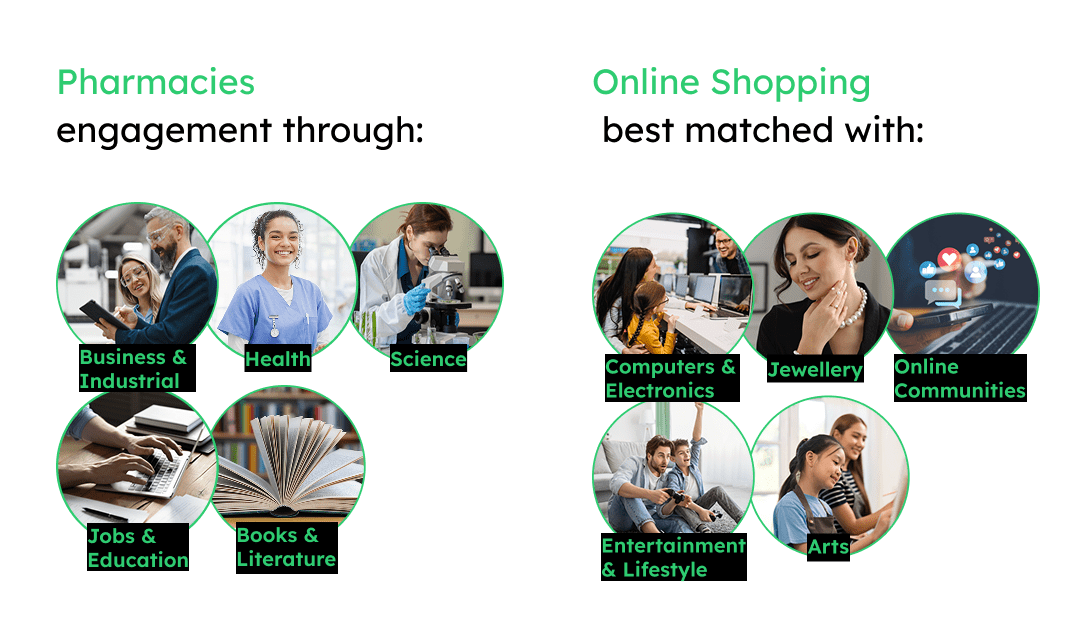
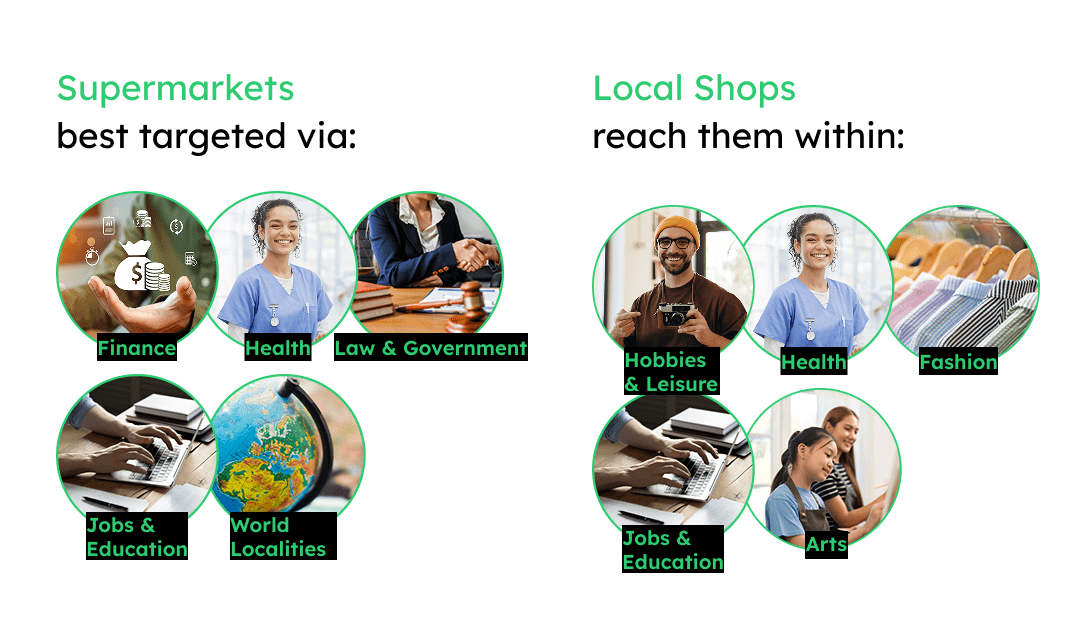
What you’ve seen in this article is only a surface layer of the behavioral model. Behind these insights is our proprietary Smart Audiences system, powered by Deep Learning that combines thousands of signals – media behavior, placements, search signals, tone of the content, and more.
It predicts and activates the best message-market fit in real time.
For each we are ready to activate.
Want to reach smarter? Let’s talk.
Sample: Respondents from all five major regions of Brazil: North, Northeast, Center-West, Southeast, and South.
Demographics: Gender and age groups (18–24, 25–34, 35–44, 45–54, 55–64, 65+).
Key Questions:
Q1: What matters most when buying personal care products (e.g., shampoo, shower gel, deodorant)? (select one answer)
a) Low price & Discounts – I choose the cheapest option or wait for discounts.
b) Ingredients & Quality – I prefer for example natural or eco-friendly products.
c) Familiar brands – I stick to brands I know and trust.
d) Recommendations – I choose products specialists, friends, or family suggest.
Q2: Where do you most often buy personal care products? (select one answer)
a) Pharmacy or drugstore – I prefer buying from a pharmacy.
b) Local stores – I shop at neighborhood stores
c) Supermarkets & hypermarkets – I grab them while doing other shoppings
d) Online – I buy from online stores.
To understand the key drivers behind consumer choice in a commerce-oriented brand study, we conducted an online survey using run-of-network targeting across digital media. The setup was designed to ensure balanced representation from all five major regions of Brazil – North, Northeast, Center-West, Southeast, and South – providing a comprehensive view of the national consumer base. The analysis focused on identifying the most influential factors determining consumer behavior by applying one-vs-all logistic regressions using the variable “Main Purchase Decision Factor” as the target. This variable captures the primary reason respondents chose a product, encompassing options such as brand familiarity, ingredient quality, low price/promotions, and recommendations.
The dataset contains 2,648 fully completed responses — only participants who answered all four survey questions were included in the analysis to ensure data quality. The dataset comprises both categorical features (e.g., gender, age, region, purchase location) and binary indicators representing exposure to various contextual domains such as “World Localities,” “Automotive,” “Sports,” and others. After excluding records with missing target responses, a one-hot encoding scheme was applied to all categorical variables, and context exposures were treated as binary features. Each unique target class was analyzed against all others using a separate logistic regression, yielding interpretable coefficients, odds ratios, and significance values. This allowed us to identify the variables most predictive of each decision factor while controlling for others.