
Navigating Google’s Updated Approach to Third-Party Cookies
On July 22, 2024, Google announced a significant shift in their strategy regarding third-party cookies.

No data? No problem. Zero-party data lets FMCG brands scale personalization, build trust, and target intent – not assumptions.

Everyone is in the process of digital transformation and better use of data. The issue is – it’s not a level playing field and advertisers choose various strategies to step up their digital game.
High-involvement categories like tech and luxury goods have a built-in advantage. These brands benefit from loyal users, direct relationships and robust first-party data ecosystems, which of course give the ability to segment and precisely target known customers.
While third-party targeting might seem like the next best alternative, the digital advertising landscape is shifting fast. Growing skepticism around its accuracy is hard to ignore – studies show that up to 56% of users are mistakenly categorized into multiple age groups at once [take a look at the study], highlighting just how unreliable these models can be. It’s becoming increasingly clear that the traditional targeting playbook is no longer effective.
But what about low-involvement categories, such as FMCG? These companies face a stark challenge – limited digital touchpoints, poor 3rd party, minimal first-party data and no direct access to the consumer. And in a world where personalized relevance is the currency of attention, the question becomes:
The answer begins with understanding the broader shift: from stricter global privacy regulations and the phase-out of cookies, to a growing movement of privacy-aware consumers. In fact, over 50% of users now actively delete their browsing history or switch browsers entirely to protect their data. A real-world example? In May 2024, Brave Browser surged to 78.95 million monthly active users – an undeniable signal of change.
Those changes opened the door for a new era of privacy-safe, user-centric, AI-enhanced advertising. In this article, we’ll explore how zero (PD) can become a hero for FMCG marketers seeking scalable personalization and brand relevance – without relying on cookies or sensitive data.
1: Washington Post and Schar School of Policy and Government a George Mason University as cited in article, Dec 22, 20212.: Internal Adlook’s Study: https://blog.adlook.com/blog/why-socio-demographic-data-fails-a-study-unveils-major-gaps-in-accuracy

It’s data that consumers intentionally and proactively share – about their preferences, purchase intentions, values or personal context. They could be collected through surveys, onboarding forms, wishlists or polls. It’s a direct line to the consumer’s mindset and for brands traditionally disconnected from their audiences, it’s a game-changer.
Imagine knowing not just what someone bought, but why they bought it. That’s the power of zero-party data. It adds human context to the digital signal.
To give you an example; In Brazil, people who choose Personal Care products based on recommendations are 8 percentage points more likely to buy them online (35%) compared to the category average (27%). And it turns out, men rely on recommendations even more than women – 24% vs. 17%. These are fantastic insights, which can fuel & enhance both – media AND creative solutions!
According to eMarketer (2024), 55% of global marketers cited zero-party data as their top strategic priority in preparing for a cookieless future, especially in sectors lacking rich first-party datasets. Recognizing its potential as a futureproof solution to deliver both privacy-compliant insights and long-term campaign effectiveness.
Unlike DTC or subscription-based companies, FMCG brands often operate without – already mentioned – direct-to-consumer channels or robust customer data platforms. Retailers own the transaction, the brand owns… well, the hope of shelf placement and mass reach.
Zero-party data changes this equation. It creates an opportunity for direct dialogue, allowing brands to ask and receive valuable consumer insights. Using properly constructed, brand aware or not aware online surveys in the open web, brands can gather real-time data at scale – without owning a single digital property.
Zero-party data isn’t just about asking questions – it’s about asking the right ones, collecting responses at scale, and transforming them into high-value audience insights through intelligent modeling. Get familiar with the process, which we’ve distilled into a few clear steps below.
1. Ask the Right Question
The quality of the insight is only as good as the question you ask. A well-crafted question doesn’t just gather surface-level data – it reveals underlying motivations, preferences and emotional drivers that influence how people perceive and engage with your brand or particular product.
When you ask the right question, you gain:
✅ Deeper Understanding of Consumer Intent
Instead of guessing why someone chooses a product, you get a direct answer. Is it price? Quality? Brand values? Convenience? These insights help you segment audiences by what truly matters to them.
✅ Message-Market Fit
Knowing what motivates your audience allows you to create messaging that resonates, because you’re not just speaking to demographics, you’re speaking to mindsets.
Example:
Asking, “What do you look at when buying a perfume?” helps you understand if someone is price-sensitive, brand-driven or emotionally connected to scent stories.
For “Discount Seekers,” the message might be: “Luxury scents, without the price tag.”
For “Brand Believers,” it could be: “Iconic names. Unmistakable quality.”
✅ Smarter Product and Content Personalization
Want to build bundles, recommend products or tailor creative? The right question gives you the insights to do so – grounded in user-provided intent, not assumptions.
Example:
Asking “How many steps are in your skincare routine?” tells you how engaged someone is with the category. You can target:
“Skincare Savvies” with advanced serums and routines
“Minimalists” with 2-in-1 solutions and time-saving tips
✅ Cultural and Contextual Relevance
A simple question can reveal cultural nuance, regional habits or device usage that helps you fine-tune where and how you deliver your message.
Insight: People who prioritize “low price” may skew toward smaller cities, use desktop and consume content in News & Lifestyle categories – this shapes both targeting and placement strategy.
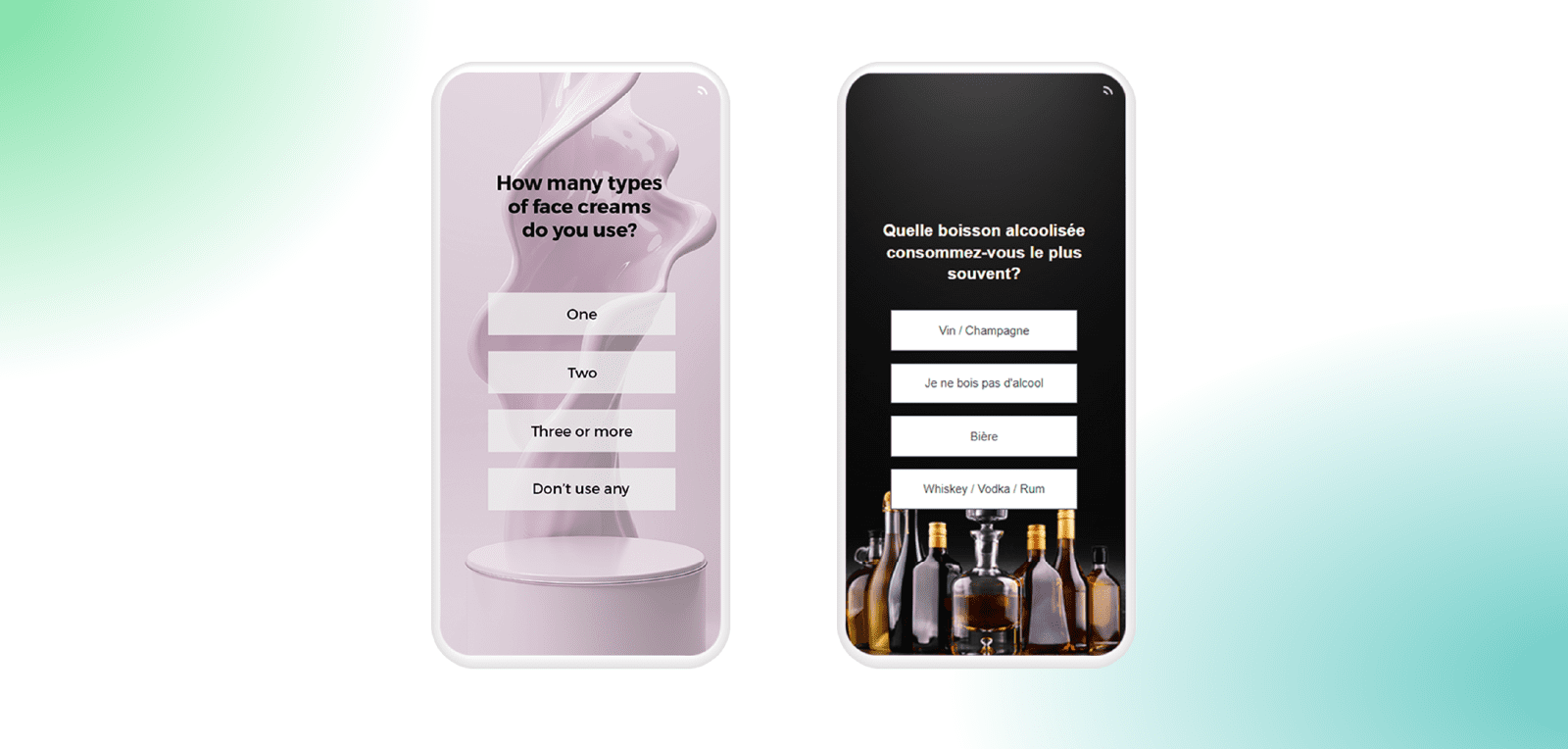
When a user responds, we don’t just receive the answer – we capture a rich layer of contextual data that comes with it, pulled from the bid request environment. This includes device type, location, time of day, site category, content they are engaging with and more – what we call signals. Based on those rather than cookies, 0 party data ensures future-proof performance.
All survey responses and signal data goes through proprietary modeling where we need to go deeper into each response, look for correlations between different data points and draw conclusions. Relying on robust modeling built on large volumes of data is crucial. This ensures the scale is significant enough to generate reliable and actionable insights.
These insights allow us to generate custom, scalable audience segments grounded in real consumer input. Signal Profiles – intelligent, psychographic targeting clusters that fuel upper-funnel brand campaigns with authenticity, privacy and precision.
To demonstrate the power of zero-party data in action, let’s look at a campaign conducted for a leading FMCG brand in the snack category. While the brand name and some assumptions remain confidential, the campaign’s structure and outcomes illustrate how intentional consumer input can shape highly relevant, context-driven audience segments and creatives.
While zero-party data offers a powerful path forward, unlocking its full potential requires overcoming a few key hurdles. To futureproof your strategy, brands must address these challenges with smart planning, the right partners and a willingness to invest in long-term value.
The Objectives:
We embedded short, high-impact surveys within relevant media placements to understand when and how consumers would most enjoy the product. Respondents were asked to choose the most fitting consumption situation.
The top responses gave us more than just preference data – they revealed patterns of behavior, context and signals that could be translated into both creative and targeting approaches. For example:
We then developed banner creatives that connected the brand’s core proposition with the top two consumption moments for each occasion. Each creative variation was designed to reflect not only the context but also the emotional tone and media habits of the target segment.
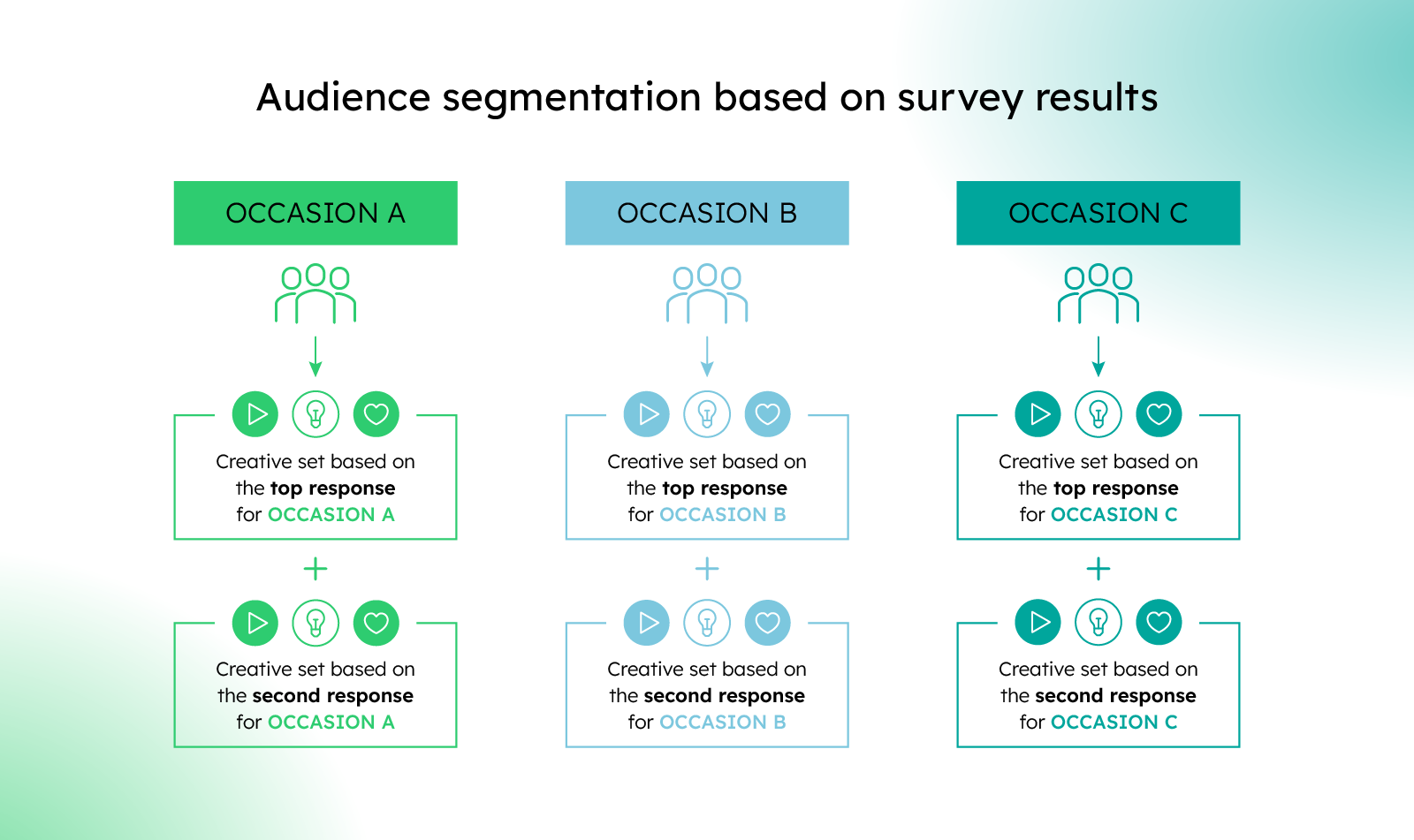
To validate the effectiveness of zero-party data-driven approach, we conducted a Brand Lift study within three main segments. Our focus was on evaluating brand preference and message association within each of the group (over 3,3k responders).
Users were divided into two groups:
Both groups were later shown Brand Lift survey banners, asking How would you rate the BRAND in terms of perfectly complementing your meal?
With the wide range of options to mark: Very high/High/Medium/Low/Very Low – making the study even more insightful.
The results spoke for themselves.

Each exposed audience segment demonstrated a relative lift in brand preference when compared to the control group – validating that tailored messaging based on zero-party insights not only improved engagement but also strengthened brand association in the intended contexts!
In a world where data access shrinks, zero-party data + AI give brands a way to scale relevance without violating privacy – making low-involvement brands and products truly high-impact. This approach enables brands to move beyond demographics and into motivation-based marketing – targeting people not just for who they are, but for why they buy.
Sources:
1: Washington Post and Schar School of Policy and Government a George Mason University as cited in article, Dec 22, 2021
2.: Internal Adlook’s Study: https://blog.adlook.com/blog/why-socio-demographic-data-fails-a-study-unveils-major-gaps-in-accuracy
3: Emarketer survey: Change in Measurement and Targeting Over the Next 2 years According to Brand Marketers Worldwide, by Type, October 2024